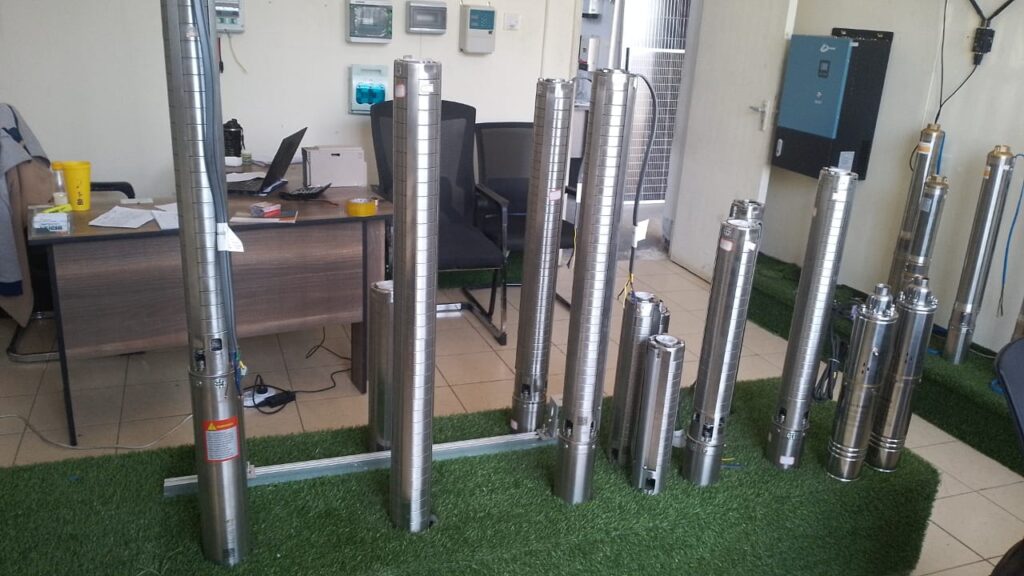
Solar Water Pump Prices in Kenya – Surface vs Solar Submersible Pump Kenya | Complete Buyer’s Guide
Solar Water Pump Prices in Kenya (Surface vs Submersible) – What Buyers Need to Know
If you are researching solar pump prices in Kenya, you are likely looking for a reliable and cost-effective way to pump water for irrigation, boreholes, livestock, or domestic use. Understanding the difference between surface pumps and a solar submersible pump Kenya option will help you choose the right system based on your water source and daily needs.
With rising fuel costs and unreliable grid power, solar water pumping has become one of the most practical investments in Kenya. Let’s break down pricing, performance on cloudy days, sizing, battery requirements, and key comparisons.
1. Solar Surface Pump vs Solar Submersible Pump Kenya
A) Solar Surface Pumps
Surface pumps are installed above the ground and draw water from shallow sources such as:
- Rivers
- Shallow wells
- Water tanks
- Ponds
They are ideal when:
- Water depth is less than 7–8 meters
- The pump is placed close to the water source
Advantages:
- Lower initial cost
- Easy maintenance
- Good for irrigation and water transfer
Limitations:
- Not suitable for deep boreholes
- Performance drops if suction height increases
Surface systems usually have lower solar pump prices in Kenya compared to submersible systems because they require less powerful motors.
B) Solar Submersible Pump Kenya
Submersible pumps are installed inside the borehole or deep well and push water to the surface.
They are ideal for:
- Boreholes
- Deep wells
- Underground water sources
Advantages:
- Can pump from depths of 20m to over 200m
- More efficient for deep water
- Longer lifespan when properly installed
Limitations:
- Higher initial cost
- Requires professional installation
If you are comparing water pump prices in Kenya, submersible pumps are more expensive than surface pumps but are necessary for deep water sources.
2. Do Solar Pumps Work on Cloudy Days?
Yes solar pumps do work on cloudy days, but performance depends on:
- Quality of solar panels
- Pump controller efficiency
- System sizing
On cloudy days:
- Water output may reduce slightly
- The pump may run at lower speed
- Water flow decreases but does not stop completely
High-quality systems from professional installers are designed to maximize sunlight capture, ensuring consistent water supply even during low sunlight conditions.
3. Do Solar Water Pumps Need Batteries?
In most cases, NO.
Solar water pumps in Kenya are designed to:
- Pump water during the day
- Store water in tanks instead of storing electricity in batteries
This is more efficient and cost-effective.
Instead of buying expensive batteries, you:
- Pump water when the sun shines
- Store water in elevated tanks
- Use gravity for distribution
Batteries are only necessary if:
- You need pumping at night
- You require constant pressure systems
Most farmers and homeowners do not need batteries, which helps reduce total solar pump prices in Kenya.
4. How to Size a Solar Pump System for Daily Water Needs
Correct sizing is critical when evaluating solar pump prices in Kenya. An undersized system will not meet demand, while an oversized one increases costs unnecessarily.
Step 1: Calculate Daily Water Demand
Ask yourself:
- How many people are using the water?
- Is it for irrigation? (How many acres?)
- Is it for livestock?
Example:
- A household of 5 people needs about 500–800 litres per day.
- 1 acre of irrigation may need 10,000–20,000 litres daily depending on crops.
Step 2: Measure Water Source Depth
For boreholes:
- Measure static water level
- Measure total depth
The deeper the borehole, the more powerful the pump required.
Step 3: Calculate Total Dynamic Head (TDH)
This includes:
- Vertical lifting height
- Horizontal distance
- Tank height
TDH directly affects the motor power and number of solar panels required.
Step 4: Choose Pump Type
- Shallow water → Surface pump
- Deep borehole → Solar submersible pump Kenya
Professional assessment ensures accurate sizing and cost estimation.
5. What Affects Solar Pump Prices in Kenya?
Several factors determine final pricing:
- Depth of water source
- Required daily water output
- Pump type (surface vs submersible)
- Solar panel capacity
- Installation complexity
- Mounting structures and piping
That is why water pump prices in Kenya vary widely depending on application.
6. Surface vs Submersible: Quick Comparison
| Feature | Surface Pump | Submersible Pump |
|---|---|---|
| Installation | Above ground | Inside borehole |
| Best for | Shallow water | Deep boreholes |
| Cost | Lower | Higher |
| Maintenance | Easier access | Requires removal |
| Efficiency in deep wells | Low | High |
If your water is shallow, a surface pump saves money.
If you have a borehole, a solar submersible pump Kenya system is the best choice.
7. Long-Term Benefits of Solar Pumps
- No fuel costs
- No electricity bills
- Low maintenance
- 10–20 year lifespan
- Reliable water for farming and homes
Though initial solar pump prices in Kenya may seem high, the return on investment is fast due to zero recurring fuel expenses.
Final Thoughts for Buyers
When comparing solar pump prices in Kenya and water pump prices in Kenya, focus on:
- Proper sizing
- Water source depth
- Daily demand
- Quality equipment
- Professional installation
The right system guarantees reliable water supply even on cloudy days without needing expensive batteries.
If you need expert advice, borehole assessment, or accurate system sizing:
Call/WhatsApp: 0720521051
Visit: episonconsult.co.ke
Get professional guidance and competitive pricing for surface and solar submersible pump systems across Kenya.